DELIVERY TRANSPARENCY ON META COMMERCE
Shopify sellers on Meta Commerce weren't set up to show delivery dates, and many didn't realize the impact on buyer confidence. I led the content strategy that drove 10K+ Shopify sellers to adopt delivery transparency in the first month.
Delivery transparency on Facebook and Instagram Shops, where the buyer's first uncertainty often shows up.
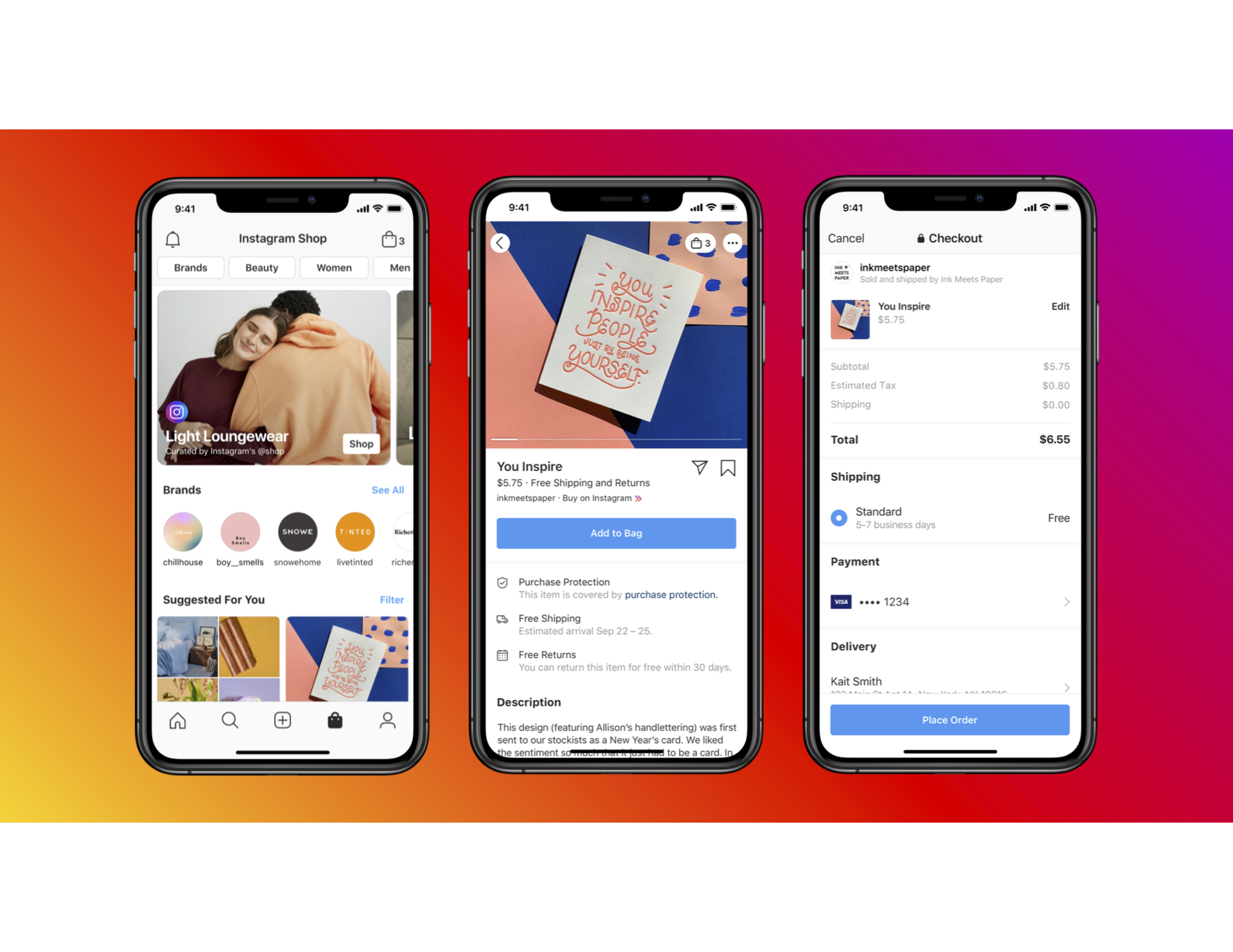
The product surfaces where the work landed. Estimated delivery dates needed to appear in the buyer's path so the trust gap could close before checkout, not after.
The Opportunity
Shopify sellers couldn't estimate or show delivery dates
Meta Commerce was growing quickly, but Shopify sellers on Facebook and Instagram weren't set up to estimate or show delivery dates. Buyers were left guessing when orders would arrive, and that uncertainty often kept them from completing a purchase.
Delivery timing is one of the most common reasons people abandon carts, but many sellers didn't realize the impact. The gap was directly affecting conversions, ROAS, and GMV.
What I Led
Content strategy and rollout for delivery transparency on Meta Commerce
I led the content strategy and rollout of delivery transparency for Shopify sellers on Meta Commerce, working across Design, Engineering, Product Marketing, and analytics to define the approach and measure impact.
What I owned
- Content strategy for the Shopify Business Suite admin and the new delivery date features.
- Information architecture for in-app seller guidance, including how processing time and transit time are introduced at the point of input.
- The empathy map of the Shopify storefront experience on Meta, used to surface where buyer uncertainty was costing conversion.
Built in partnership
- The Suggested Delivery Time metric, defined with a Principal Data Analyst to set accurate delivery expectations on product detail pages.
- Seller adoption email strategy, in partnership with the Shopify Partnership Director.
- Cross-functional rollout with Product Design, Engineering, and Product Marketing.
Approach & Key Decisions
Make the problem visible to buyers and the team
The first challenge wasn't designing a solution. It was showing that delivery timing was actually a problem. It looked like a small operational gap, but it was affecting buyer confidence and conversions.
I created an early empathy map of the Shopify storefront experience on Meta to show what buyers were seeing and where uncertainty showed up. Paired with supporting data from a Principal Data Analyst, it helped reframe the issue from a minor omission to a real trust gap that was affecting conversion.
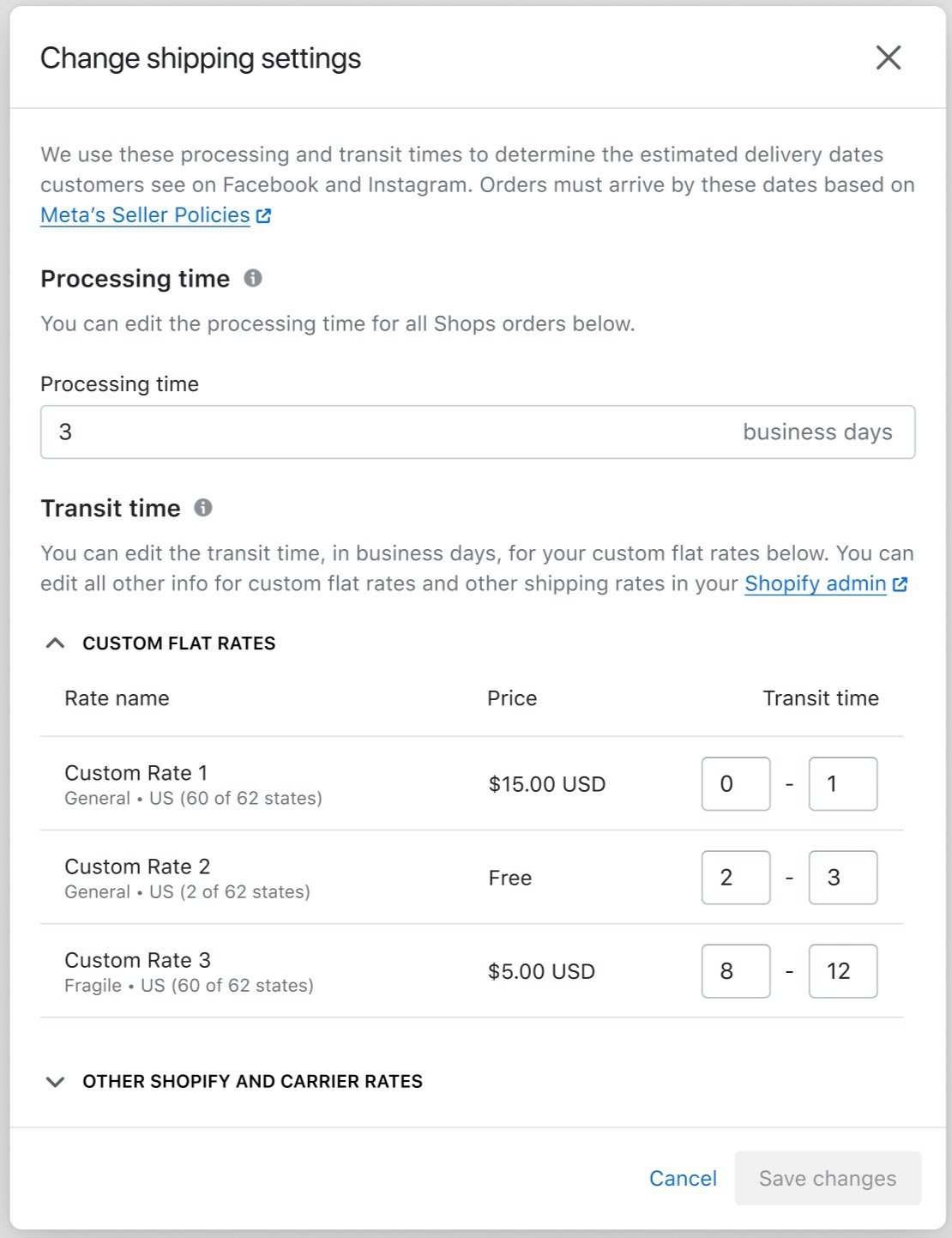
From there, the focus shifted to sellers. The feature required them to provide processing and transit times, which many hadn't tracked in a structured way. The content work focused on making that setup straightforward to complete, and on introducing the distinction between processing time and transit time so the inputs made sense.
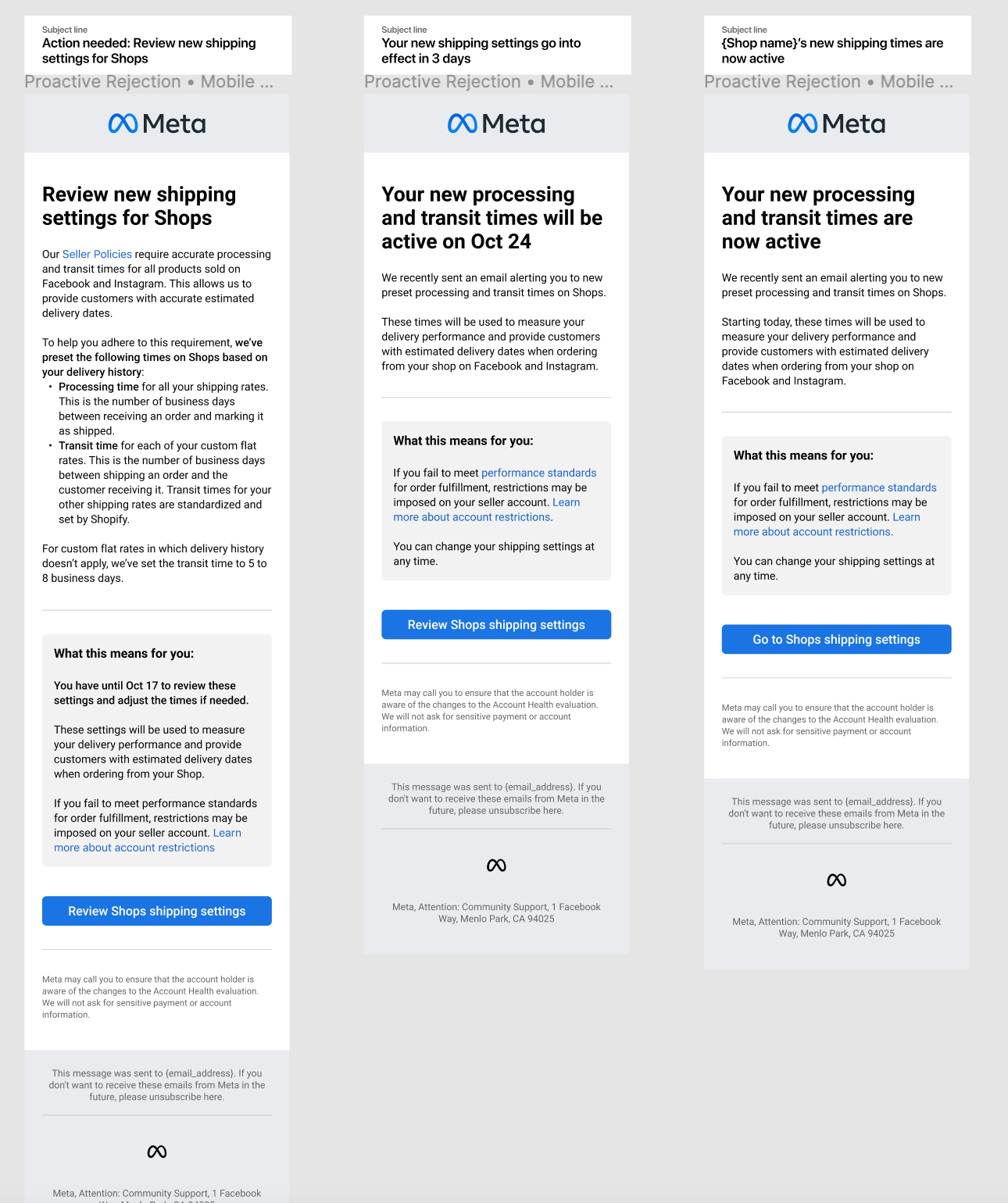
I also paired the in-product experience with an email sequence to sellers who hadn't adopted the feature yet. The messaging led with buyer impact and conversion rather than instructions, to give context before asking for action.
A new metric, in-product guidance, and a seller adoption email sequence working together to drive feature adoption at scale on Meta Commerce.
Impact
Systemic impact
- The empathy map was reused as a reference in later Meta Commerce work, grounding subsequent discussions in buyer experience.
- The Suggested Delivery Time metric introduced a clearer way to measure the impact of delivery transparency on buyer confidence, and informed how the team evaluated similar experiences going forward.
- The seller adoption approach combining in-product guidance with proactive outreach was reused in later launches to improve feature adoption.
- Established a template for pairing cross-functional teams (Design, Data, Partnerships, Product Marketing) on commerce features that depend on seller adoption.
The empathy map: making the problem visible
The hardest part of this project at the start was that the team didn't see delivery timing as a real problem. It read as a small operational gap, not a trust issue.
I built an early empathy map of the Shopify storefront experience on Meta to make the buyer's experience legible to the team. It showed where uncertainty surfaced in the buyer flow and where that uncertainty was costing decisions. Paired with supporting analytics, the artifact reframed the work from "a missing feature" to "a trust gap that was affecting conversion."
The empathy map kept doing work after the project. It was reused as a reference in later Meta Commerce projects as a way to ground discussions in buyer experience instead of starting from feature lists.
A new metric: Suggested Delivery Time
We didn't have a clear way to measure how delivery information affected buyer behavior. We could see conversion and GMV, but not whether showing delivery dates was making a difference.
I worked with a Principal Data Analyst to define Suggested Delivery Time, a metric that helped sellers estimate accurate delivery dates and made it possible to compare buyer behavior when delivery dates were shown versus when they weren't.
The metric gave the team a clearer way to understand how delivery visibility impacted conversion and to prioritize improvements. It became one of the lasting outputs of the project, used to evaluate similar experiences going forward.
In-app guidance and seller setup
Sellers were being asked to provide processing and transit times, but many didn't yet understand that these would be shown to buyers and used to set delivery expectations.
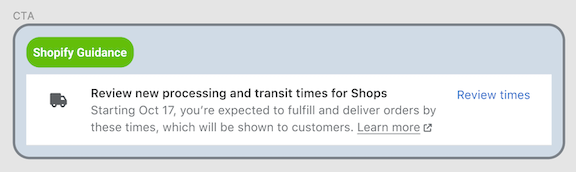
I wrote in-product guidance that clearly communicated what was changing, what sellers were now responsible for, and what to do next. Instead of relying on help content, the message appeared directly in the product and prompted sellers to review and update their settings. The Content Design separated processing time from transit time so the inputs made sense in context.
The combination of guidance and setup made the change visible and actionable, which was a meaningful driver of early adoption.
Seller emails: leading with buyer impact
We sent a series of emails to help sellers understand what was changing and what they needed to do.
Early versions focused on feature instructions. I worked with the Shopify Partnership Director to reframe the messaging to start with buyer impact, why delivery timing matters, and how it affects conversion, before introducing the new settings.
That shift made the emails more relevant and helped sellers understand why updating their delivery times was worth doing. The pairing of in-product guidance with proactive outreach became a template reused in later Meta Commerce launches.