ONE VIEW ACROSS A FRAGMENTED SYSTEM
Lowe's was migrating off Microsoft Dynamics and building a multi-product Provider Management ecosystem. Each product had its own team, roadmap, and workflows, but no shared view of how the system connected. I led the content strategy, information architecture, and governance approach that gave teams a unified view across products.
Provider Management ecosystem
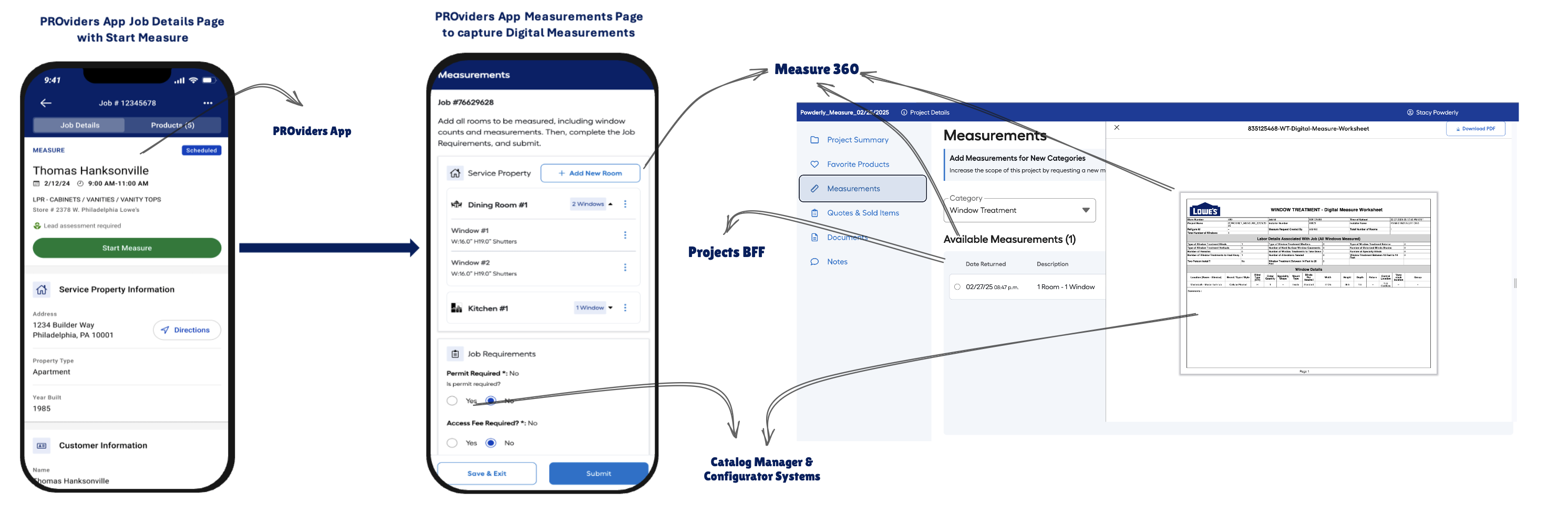
A cross-product view of the Provider Management ecosystem. Contractors, office staff, and Lowe's associates moved through different tools and workflows, but decisions in one system affected the others.
The Opportunity
A multi-product migration with no shared view of the system
Lowe's was sunsetting Microsoft Dynamics and building a new Provider Management ecosystem that supported third-party contractors and the Lowe's associates managing installation services. The ecosystem included a field mobile app, a desktop platform for contractor office staff and schedulers, an onboarding experience for new providers, and a scheduling and management platform used by both contractors and Lowe's associates.
Each product had its own cross-functional team and roadmap, but there was no shared view of how the products connected or how providers moved between them. Content, terminology, and navigation patterns were beginning to drift across surfaces, creating inconsistencies for both teams and users.
I joined as the only Content Designer working across the full ecosystem. The opportunity was to turn that cross-product visibility into shared infrastructure that teams could use independently.
What I Led
Building the shared content and IA infrastructure behind the ecosystem
I led the content strategy, information architecture, and governance approach across Lowe's Provider Management ecosystem. The work focused on creating shared artifacts and operating structures that helped teams make consistent decisions across products without relying on a single point of coordination.
What I owned
- End-to-end content and IA strategy across four interconnected products.
- The Source of Truth Document, a living cross-platform reference for terminology, navigation patterns, structural copy, historical decisions, and proposed improvements.
- Journey maps and system maps that visualized provider workflows and cross-product dependencies.
- Content and IA audits to identify gaps, inconsistencies, and standardization opportunities.
- Cross-team coordination rituals that kept Product, Design, Engineering, Research, and business stakeholders aligned.
- Governance principles for terminology, navigation, and IA consistency across products.
Built in partnership
- Per-product IA and content decisions with Product Designers and Product Managers.
- Research synthesis and recommendations in partnership with UX Research.
- Implementation scoping and feasibility with Engineering teams across the ecosystem.
Approach & Key Decisions
Make shared visibility part of the system
As the only person working across the full ecosystem, it would have been easy to become the coordination layer between teams. That works temporarily, but it doesn't scale. Teams become dependent on one person to answer questions, resolve inconsistencies, and connect decisions across products.
I approached the work differently. Instead of acting as the system memory myself, I built artifacts that made the system visible to everyone. The Source of Truth Document gave teams a shared reference for terminology, navigation patterns, historical decisions, and proposed changes. System maps showed how products and data flows connected. Journey maps showed how providers moved across platforms and where experiences overlapped.
The operating cadence reinforced the artifacts. Daily design check-ins, weekly reviews with Engineering and Research, twice-weekly alignment with Product and business stakeholders, and open office hours helped surface questions early and keep decisions grounded in shared context.
Over time, teams were able to make more consistent cross-product decisions without relying on one person to connect everything manually. Where the work touched user-facing surfaces directly, we saw measurable impact, including a 14% increase in Pro app engagement following the IA and content updates, alongside improvements in navigation clarity and content structure.
Shared system maps, journey maps, and governance artifacts gave teams a consistent view across the Provider Management ecosystem.
Impact
Systemic impact
- Created a shared source of truth for terminology, navigation patterns, and IA decisions across the ecosystem.
- Helped teams make faster cross-product decisions through shared artifacts and a consistent operating cadence.
- Reduced content and navigation drift across products used by providers and Lowe's associates.
- Established governance patterns that continue to support new features and products as the ecosystem evolves.
- Made content and IA part of cross-functional product planning, not just interface-level execution.
End-to-end provider journey ownership
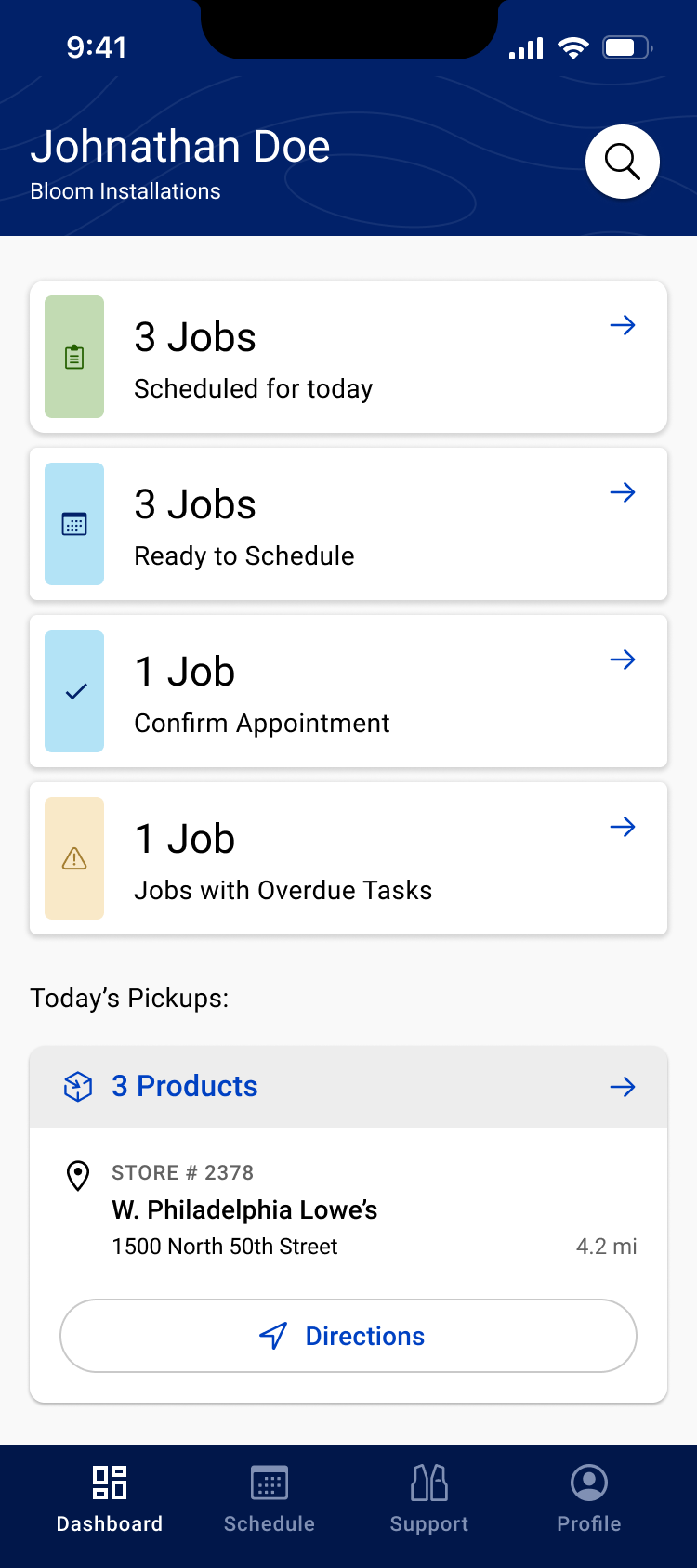
The provider experience spanned multiple products. A provider might onboard through one platform, manage scheduling through another, complete field work in the mobile app, and coordinate with Lowe's associates through separate systems along the way.
I maintained a cross-product journey map that traced those workflows end to end. It helped teams see where terminology, navigation patterns, and handoffs became inconsistent as providers moved between platforms. The map gave teams a shared view of the broader experience so product decisions could be made with more cross-system awareness.
Content governance and alignment
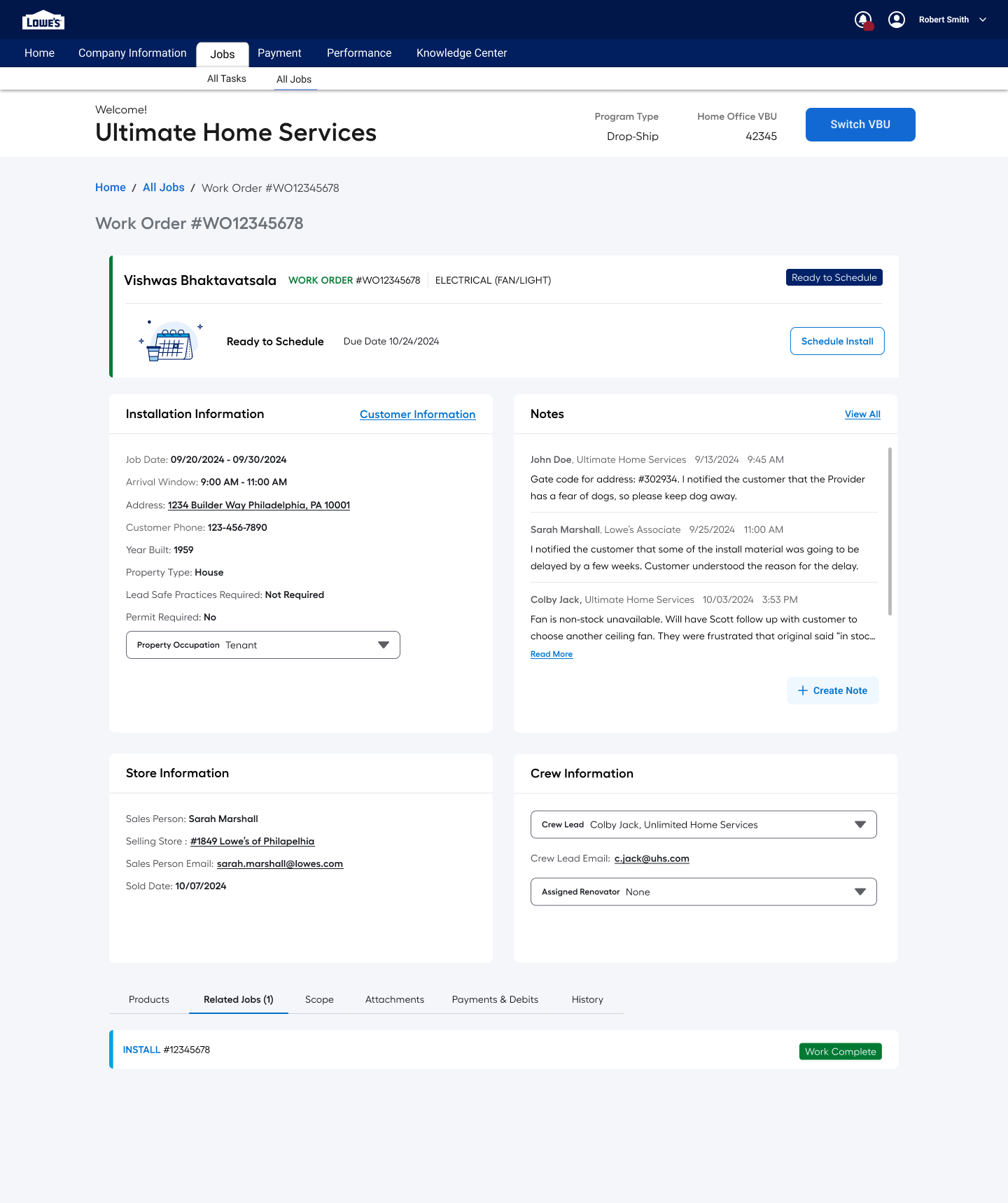
The Source of Truth Document became the shared reference point for terminology, navigation patterns, and structural copy across the ecosystem. It also captured historical decisions, proposed changes, and cross-product dependencies so teams could work from the same context.
The goal wasn't to strictly control language. It was to make consistency easier. Designers could quickly see how similar flows had already been labeled, and PMs could reference terminology that already had stakeholder alignment. The system worked because the guidance was visible, usable, and continuously maintained.
Cross-product information architecture
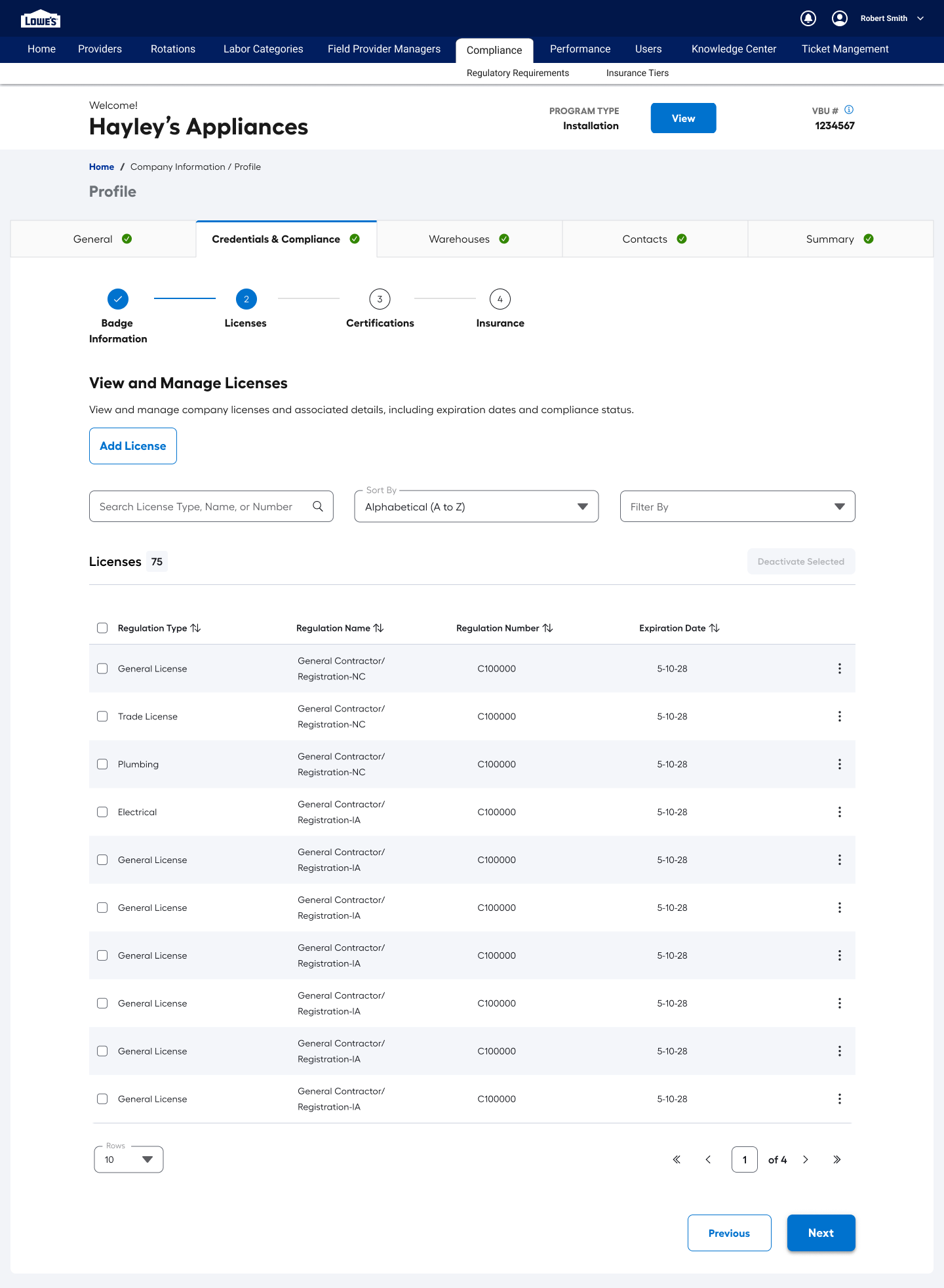
Each product had its own information architecture, but providers and Lowe's associates moved between them as part of the same workflow. A big part of the work was creating enough consistency across products that users didn't have to relearn patterns from one platform to the next.
That included shared step-progress models for setup flows, consistent breadcrumb behavior, aligned navigation patterns, and common filter and sort structures where similar content appeared. Individual product teams owned their product-level IA decisions, while I focused on the cross-product patterns that made the ecosystem feel more connected.
Cross-team alignment and operating cadence
Shared artifacts only worked if teams were regularly using them together. I established a cross-functional cadence that kept Product, Design, Engineering, Research, and business stakeholders aligned as the ecosystem evolved.
Daily design check-ins helped catch small content and IA inconsistencies early. Weekly reviews with Engineering and Research kept implementation constraints and user behavior connected to decision-making. Twice-weekly alignment with Product and business stakeholders helped teams coordinate priorities across products, while open office hours gave teams a lightweight way to resolve questions quickly.
Over time, the process made cross-product content and IA decisions more visible, collaborative, and consistent across the ecosystem.
+ Research
+ Business